
How Long Does an Accident Stay on Your Record in Ohio?
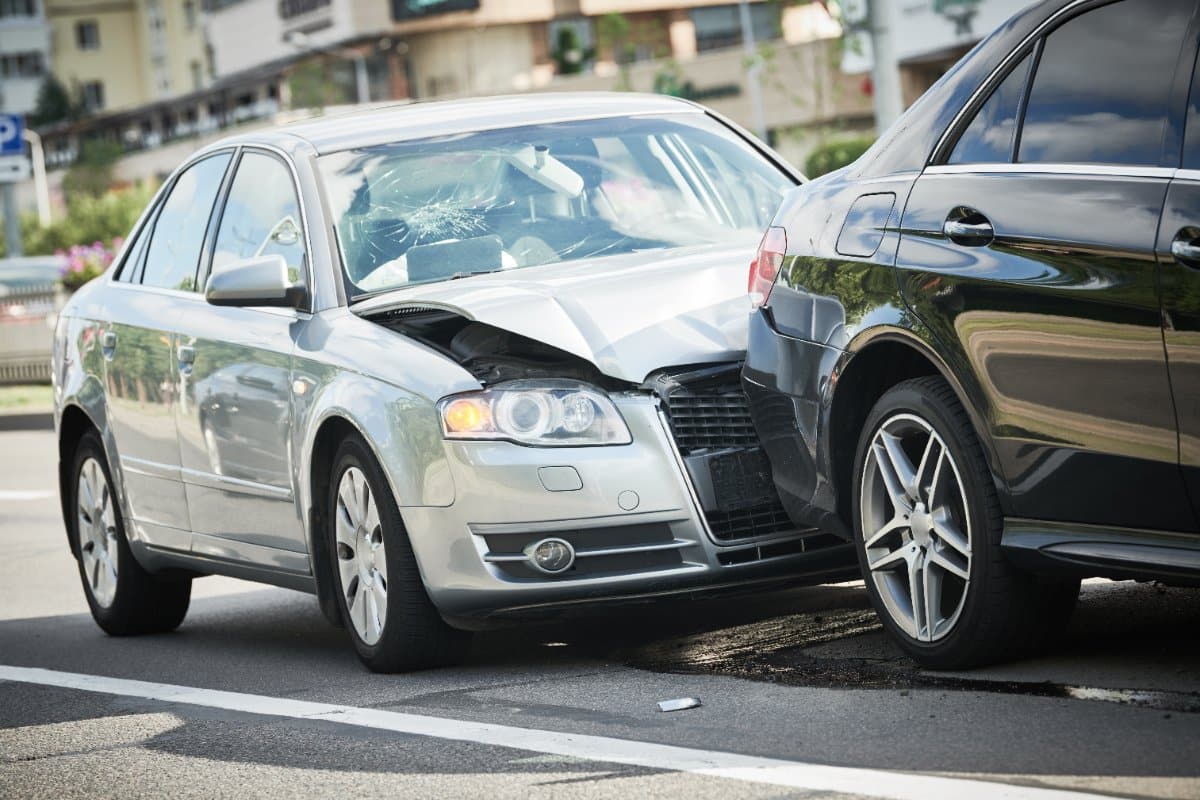 Accidents stay on your driving and insurance records in Ohio for several years. Having a record can affect everything from insurance costs to liability for future auto accidents. However, you can protect yourself from some of these consequences if you can prove that another party caused the collision and you were not at fault.
Crandall & Pera Law, LLC has decades of experience advocating for car accident victims. Read more about how an accident could affect your records and how an attorney could safeguard your rights if you sustained injuries in a crash.
How long does an accident stay on your driving record?
According to Ohio law, accidents typically stay on your driving record for 36 months (three years). This time period applies to:
- Accidents that you are involved in
- Accidents in which you received a moving violation conviction
- Driver’s license suspensions, revocations, and disqualifications
After 36 months, the above usually fall off a standard three-year driving record. In the meantime, there is usually not much you can do to have accidents removed, unless you can prove they are in error.
There are also instances where a collision could stay on your record longer. For example, if your collision resulted in you receiving a DUI conviction, it will be on your record for more than three years. If you have a commercial driver’s license (CDL), you may be subject to additional state and federal rules, and some commercial-driver crash records may remain available for up to five years, while other CDL-related history requirements may look back longer.
Accidents and license points
Convictions for moving violations not only go on your record but can also lead to points on your driver’s license. If you amass 12 points in two years, the state suspends your license for six months.
How long does an accident stay on your insurance?
Accidents stay on your insurance record for at least three years, but insurance companies may keep them on their records for up to five. While on your record, they can make your insurance premiums go up if you were at fault, though Ohio law limits rate increases after a single not-at-fault accident. If your rates do rise, the increase can be significant, depending on your insurance provider and the accident circumstances.
Ohio is an at-fault state, so drivers must carry liability insurance, meaning this expense is not a choice. According to the Ohio Bureau of Motor Vehicles, most drivers must have a minimum of $25,000 in bodily injury liability per person, $50,000 per accident, and $25,000 in property damage coverage.
Car accident victims can seek compensation from an at-fault driver’s insurer for accident-related losses, such as medical bills, lost wages, and pain and suffering. If you were hurt, a personal injury lawyer could tell you more about filing a claim.
Can an accident record affect future car accident liability?
Yes, past accidents on a driving record in Ohio may affect an auto accident case in limited circumstances. A driving record with multiple collisions – especially if accompanied by violation convictions – could point to a pattern of negligent or reckless driving.
So, if another driver caused a collision and injured you, your lawyer could investigate whether any admissible parts of that driver’s record may support your claim. An attorney could help you obtain this and other evidence, such as police reports and eyewitness statements, and use them to build your case.
What should you do if you have been in a collision?
The first thing you must do after any auto accident in Ohio is stop at the scene. If you do not, you could incur hit-and-run driving charges, which are a criminal offense.
For collisions that result in injuries or more than $1,000 in property damage, you should call local law enforcement so a report can be made. If anyone needs emergency medical attention, call 911. If you receive emergency medical care or get treatment at a later date, start a file with all of your medical bills and records. If you have not yet seen a doctor about your injuries, do so immediately.
While still at the accident scene, if you can, gather as much evidence as possible. Get the other driver’s name, contact information, insurance information, and driver’s license and license plate numbers. Write down the names, numbers, and addresses of any eyewitnesses. Take pictures of the scene and your injuries, and write down anything of note, such as weather or road conditions.
Then, report the accident to your insurance company. They will usually begin dealings with the other driver’s insurer. If insurance does not pay you promptly and in full, consider contacting an attorney about your case. Getting a lawyer involved right away can help with the collection and preservation of evidence. It can also keep you from making a mistake that could hurt your chances of securing compensation.
See, insurance is a for-profit business. Insurance companies make more money when they can find reasons to deny claims or reduce payments. To that end, an insurance agent representing the other driver may contact you and try to get you to admit fault or accept an initial (often lowball) settlement. Running communications through a lawyer can protect you and ensure that you do not accept an offer that is not fair and does not satisfy your losses.
How long do you have to seek injury compensation after a crash?
You should not wait to start the auto insurance claims process. Policies can have short deadlines, and delays in filing could also be used by opposing parties as proof that your injuries did not actually come from the crash.
Additionally, if you must file a personal injury lawsuit, you will have to do so within the statute of limitations, or you cannot take your case to civil court, and you can lose your legal leverage. According to Ohio Rev. Code § 2305.10, you usually have two years from your injury.
Call Crandall & Pera Law, LLC
Crandall & Pera Law, LLC has over 50 years of experience representing personal injury victims. We have won multimillion-dollar auto accident cases, and our clients have given us over 450 five-star reviews.
We care about helping people regain control of their lives after a serious injury, and we know how to prove negligence and hold at-fault parties accountable. If you suffered harm in a collision, we can help you build a claim for compensation, including investigating the other driver’s past driving record. To learn more about our services, contact us today. We offer free initial consultations and have offices in eight convenient locations across Ohio and Kentucky.