
What Is a Liability Waiver and Can You Still Sue?
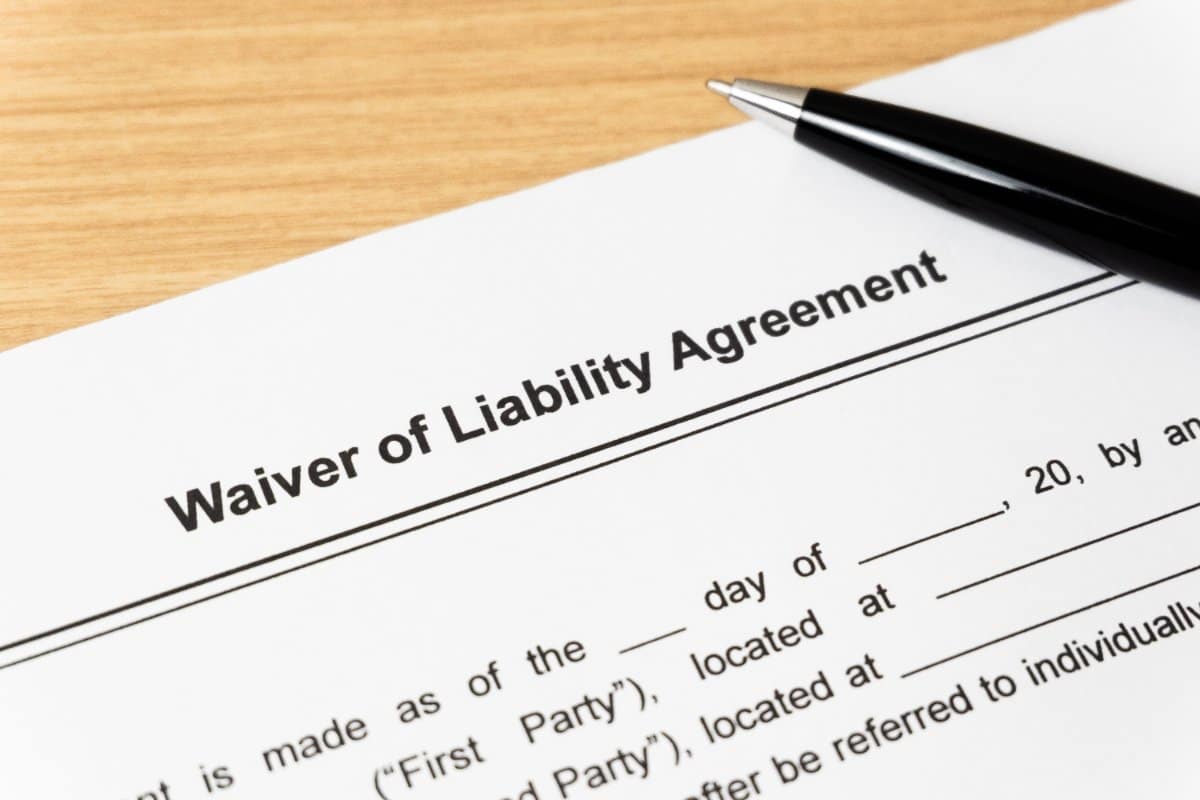 A liability waiver is a legal contract that can release a company from responsibility for accidents and injuries. Essentially, if you sign one, you give up your right to sue – or do you? In some cases, it is a myth that signing a waiver bars you from filing a lawsuit. There are situations where the waiver may not apply, allowing you to seek compensation for your damages.
If you were hurt after signing a waiver, you should consult with a personal injury lawyer before deciding that you cannot take legal action. Keep reading to learn more about waivers and how Crandall & Pera Law, LLC could help you with your case.
Liability waivers – what are they and when are they used?
A liability waiver is a contract, usually between an individual and an organization or business. It states that the individual will not hold the other entity liable for accidents and injuries.
Waivers are common in premises liability law because companies that operate properties that have inherent dangers often use them. For example, you may need to sign a waiver before going to an amusement park, water park, or trampoline park.
An organization or business may also ask you to sign a waiver before you (or your child) can participate in certain, potentially injurious, activities, like a contact sport or an overnight campout.
Can you sue if you signed a liability waiver?
In some situations, signing a liability waiver may remove your right to sue, but not always. There are times when a waiver may not hold. There are also instances where you may be able to take action against a responsible party that was not covered by the waiver.
A lawyer may be able to help you file a lawsuit after signing a waiver if you can prove that:
Your injury happened because of wanton or willful misconduct
Waivers generally only release entities from responsibility for injuries caused by ordinary negligence. Ordinary negligence is the failure to act in a way most others in the same situation would find reasonable. It typically applies to accidents where someone’s behavior harmed someone else, but it was not intentional.
Waivers usually do not release parties from injuries resulting from wanton or willful misconduct. Wanton misconduct involves a failure to exercise any care under circumstances where there is a great probability that harm will result. Willful misconduct involves an intentional deviation from a clear duty or knowingly doing a wrongful act likely to cause injury.
So, say you are swimming at a water park and suffer a near-drowning injury because the lifeguard on duty did not spot you in distress. That would be an example of ordinary negligence, and you may not be able to sue if you have signed a waiver. However, if the lifeguard failed to save you because they were drunk on duty, and their supervisors at the water park knew it, that could support a claim involving wanton misconduct or another form of misconduct beyond ordinary negligence.
The accident involved a liable third party
The waiver you signed is only between you and the parties stated in the contract. So, if your accident resulted from a third party’s negligent behavior, you may still be able to file a lawsuit.
Product manufacturers are common third parties in these types of cases. For instance, if you were hurt riding a roller coaster and the cause was a defective safety bar in the cart you were in, you may have a case against the entity that made the coaster, or even that specific part.
Keep in mind that you usually cannot file a third-party lawsuit against an employee of the company with which you signed a waiver if the waiver covers employees’ actions.
The waiver is not valid
Like any contract, there are certain factors that can affect whether a liability waiver is valid in Ohio. Generally, enforceable waivers should:
- Identify the released parties
- Be signed by the person waiving rights willingly, and not under pressure or duress
- Be easily read by all parties (i.e., no hidden clauses or “fine print”)
- Make clear what claims the signer is waiving
- Identify the activity, risks, or claims clearly enough to avoid ambiguity
If the legal terms of a waiver have not been met, your attorney may be able to build a case based on this fact.
What should you do if you sign a waiver and then get hurt?
If you are hurt in an accident after signing a waiver, you should follow the same steps you would have had you not signed one, just in case you end up having the right to sue.
Your health should come first, so get treatment for your injuries right away if you did not receive emergency care at the time of your accident. This protects you physically and legally because it creates a medical record that you will need for case evidence. Save any related documentation, including bills and medical records.
Reporting the accident should also be a priority. You should make a formal, written report to the business or organization that owns the property where your accident happened or was in charge of the activity that harmed you. You should also report the incident to local law enforcement. Ask for and keep copies of these reports.
Next, talk to a lawyer about your options. Remember, waivers are not necessarily ironclad, so you may have a case. You could also have the right to sue a liable third party. If you do, an attorney can help you build your case with evidence and file an insurance claim. From there, they can work to negotiate a fair settlement or litigate on your behalf in civil court.
Lawsuit time limits
Do not let signing a waiver delay you from consulting with an attorney. If you can sue, your time to do so is restricted by the statute of limitations, so waiting too long could bar you from taking legal action. According to Ohio Rev. Code § 2305.10, you have two years from the time of your accident to file most personal injury cases.
Contact Crandall & Pera Law, LLC today to learn more
If you have questions about your lawsuit eligibility after signing a waiver, contact Crandall & Pera Law to find out about legal options that may be available to you. Waivers are not always bulletproof, and you may still be able to seek compensation.
We have offices in eight locations across Ohio and Kentucky. Reach out to us today to learn more during a free consultation.