
Infant Walkers and Child Injuries in 2026 — What Parents Need to Know
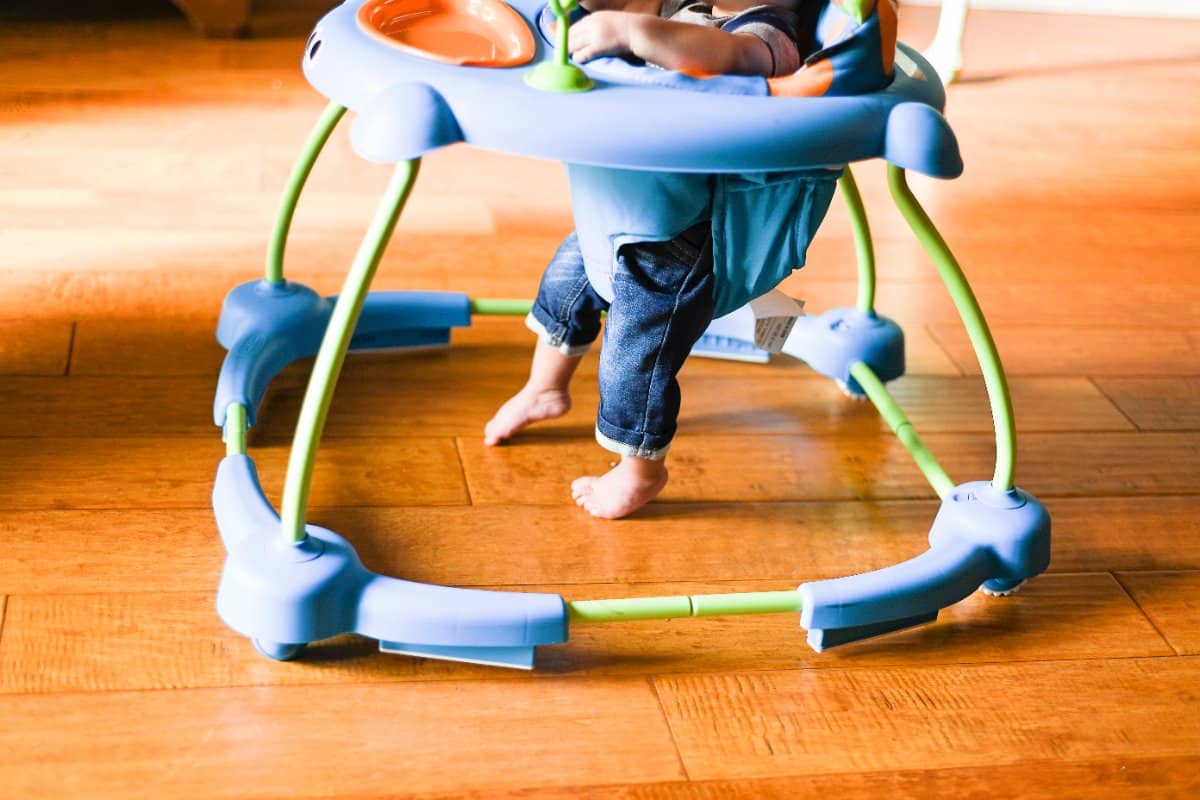 In 2026, parents often assume that a baby product must be safe and legally approved for use if you can find it in stores. However, that isn’t always the case. Infant walkers are sold at many large retailers, and you can find countless more on Facebook Marketplace and other resale sites. Despite being widely available, infant walkers continue to be associated with a significant number of injuries to babies in the United States.
Pediatricians continue to advise parents not to put their children in these devices. If your child has been injured while using a walker in Ohio, you may have legal options. Contact Crandall & Pera Law, LLC to learn more.
What is an infant walker?
An infant walker is a device with a plastic or fabric seat suspended inside a frame with wheels that allow the child to move around using their feet and a tray positioned in front of the child. They’re not the same as stationary bouncers or learning centers that have similar seats but no wheels, nor are they the same as activity walkers that a child walks behind and pushes.
The companies that create and sell walkers claim that they help babies practice walking, but child development experts disagree. They believe that not only do these tools potentially delay walking, but they also pose serious injury risks to babies.
How common are baby walker injuries?
A recent CPSC report estimated an average of 3,100 emergency department-treated injuries from baby walkers, jumpers, and exercisers in 2023. While this does group walkers with other baby tools and toys, it highlights the serious risks these tools pose.
The good news is that walkers are becoming increasingly less common. In 2023, there were 351,000 fewer baby walkers sold than in 2013, according to Consumer Reports.
Injuries due to baby walkers can occur in a variety of ways, including:
- The baby walker falls down a staircase
- A baby leans to one side and tips the walker over, becoming entrapped
- A baby uses a walker to reach dangerous objects, such as hot stoves or knives
- The walker collapses, and the child becomes stuck
In response to these injuries, the CPSC required several changes that took effect in 2010. Several more changes were made by ASTM in 2022. These changes required walkers to undergo rigorous tipping tests, including resistance to immovable objects, resistance to a baby leaning over the edge, and prevention of falls down stairs.
These changes have steadily reduced injuries, but they have not eliminated them completely. This preventable risk highlights why Canada has banned baby walkers since 2004.
Why pediatricians haven’t stopped calling for a ban on walkers
Although changes in safety requirements and testing have led to some improvement in injury numbers and rates, pediatricians continue to urge the government to ban walkers—and, barring that, for parents not to use them at all. Their concerns include:
- Stair falls: Stair falls are one of the most serious risks created by infant walkers. Even when parents put up baby gates, a baby moving with enough force in their walker can break through a lightweight gate. A baby who falls down the stairs in a walker isn’t just hurt by the stairs, but by the walker itself.
- Head trauma: The likelihood of a head injury when a baby falls down the stairs is very high. Babies face potential skull fractures, concussions, and traumatic brain injuries. Head injuries are always something to be wary of, but especially when we’re talking about a baby’s rapidly developing brain and more flexible skull bones.
- Burns and other injuries: Walkers may give babies access to surfaces and items that they would otherwise never be able to reach. A determined baby may roll in a walker and grab a hot cup of coffee, touch a hot oven door, grab cleaning chemicals, or get their hands on sharp kitchen utensils.
- False sense of security: Parents tend to have a false sense of security when their child is contained in a walker or other similar device. This may lead to less supervision and more risk overall.
- Physical and developmental delays: Developmental experts note that walkers do not strengthen the muscles needed for walking because walking relies largely on both leg strength and core stability. Additionally, babies in walkers tend to place their weight on their toes, rather than spreading it through their feet.
Your legal options after a walker injury
Not every walker case gives parents the option to sue. If parents fail to use the product as directed—for example, failing to buckle in the child, allowing the child unguarded access to the stairs, or using the walker when their baby is too young or too old—that makes it much harder to build a strong claim.
However, you may have a legal claim if your baby’s injuries were the result of negligence on the manufacturer’s part. For example:
- The walker malfunctioned even though you were using it appropriately.
- The brakes failed, and the child was able to move freely despite the parents putting on the brakes.
- The frame collapsed and pinned the child.
- The product was recalled but remained on store shelves. In limited circumstances, Ohio law may allow claims against retailers, particularly if statutory exceptions apply.
- A design defect allowed the walker to access stairs despite representations that it would prevent stair falls.
Product liability laws allow consumers to hold manufacturers and distributors responsible for injuries caused by their design defects, manufacturing defects, or failure to warn.
However, manufacturers and retailers have dedicated legal teams. That’s why it’s important to work with a personal injury attorney who can gather and present evidence, advocate for you, and fight for the compensation you are owed.
Start your baby walker injury claim with Crandall & Pera Law, LLC
If your little one has been injured in an infant walker, you may have a claim against the manufacturer. Let’s talk about your case in greater detail and determine your next steps — contact us today.